

Shoebill Tracking in Uganda | Best Places to See the Shoebill Stork
Among the world's serious birdwatchers, the shoebill is spoken of in the same breath as the great rarities of the natural world a bird so singular in appearance, so extraordinary in behaviour, and so ancient in its lineage that a sighting feels less like observation and more like an encounter with deep time itself. Uganda is where you come to find it. This guide curated by the specialists at Savannah Explore Africa covers every detail you need to plan a shoebill tracking experience worthy of the bird itself: where to go, when to visit, what to expect on the water, how to photograph it, and how to weave a shoebill encounter into the wider tapestry of a Uganda safari.
Uganda is widely regarded as the world's premier shoebill destination. The most reliable location is Mabamba Swamp, approximately 45 minutes from Entebbe International Airport, where traditional canoe excursions through papyrus wetlands deliver consistently high sighting rates often within the first hour on the water. Tracking is available year round, with costs starting from $50–$100 per person for a half-day excursion.
Shoebill Tracking in Uganda:
The Complete Guide
Where to Find Africa's Most Mysterious Bird and How to Make the Most of the Encounter
Updated June 2026 ◆ Mabamba Swamp · Murchison Falls · Ziwa Rhino Sanctuary · Photography & Planning
It regards you with an expression that has not changed in fifty-seven million years. Standing nearly a metre and a half tall, motionless as a monument in the shimmering papyrus, the shoebill stork watches unhurried, imperious, and utterly indifferent to the smallness of everything around it. Then, in a single explosive instant, it strikes.
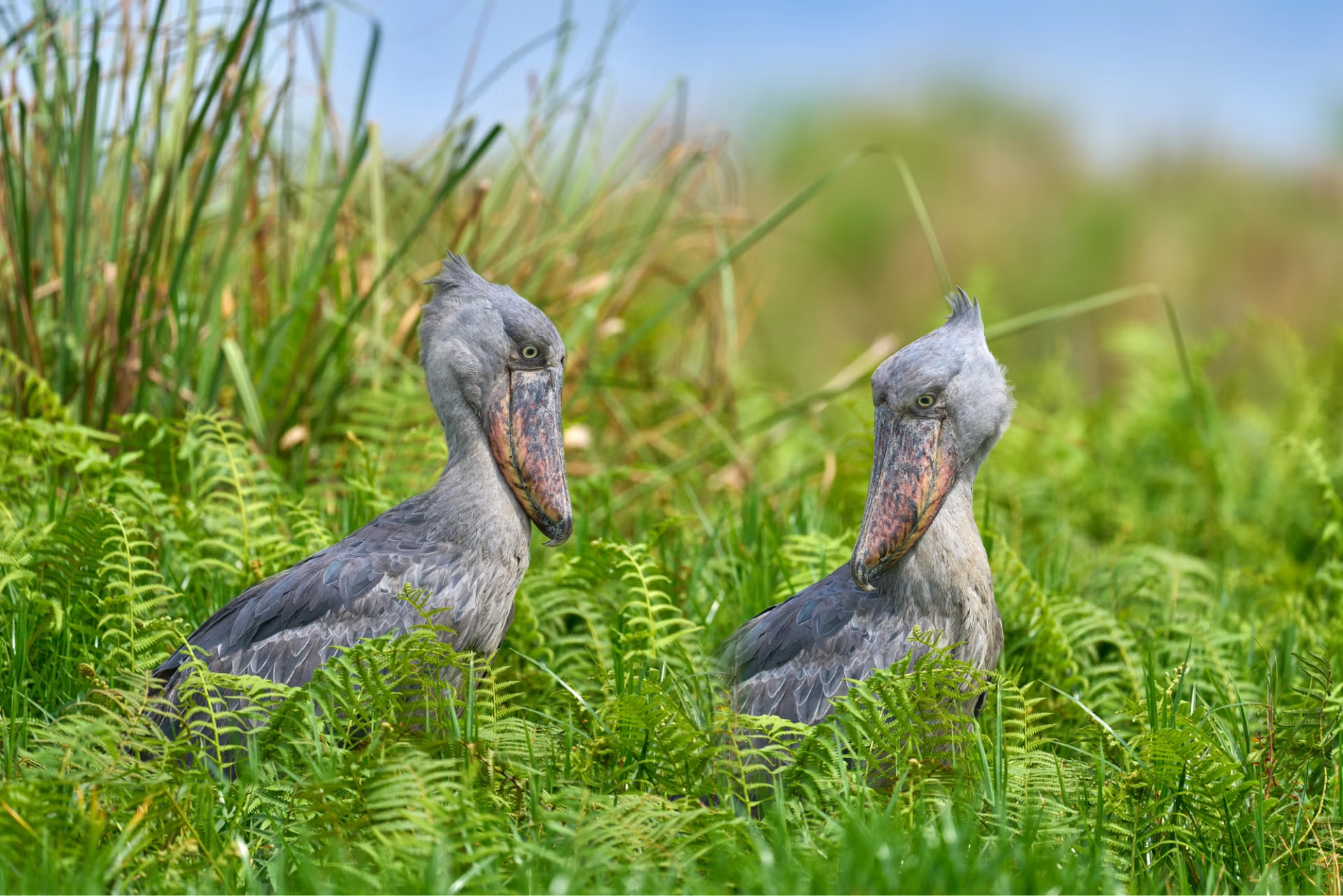
Mabamba wetland shoebill
Among the world's serious birdwatchers, the shoebill is spoken of in the same breath as the great rarities of the natural world a bird so singular in appearance, so extraordinary in behaviour, and so ancient in its lineage that a sighting feels less like observation and more like an encounter with deep time itself.
Uganda is where you come to find it. This guide curated by the specialists at Savannah Explore Africa covers every detail you need to plan a shoebill tracking experience worthy of the bird itself: where to go, when to visit, what to expect on the water, how to photograph it, and how to weave a shoebill encounter into the wider tapestry of a Uganda safari.
"For many visitors to Uganda, spotting a shoebill rivals the excitement of a gorilla trek or a lion sighting. Once seen, it is never forgotten."
What Is a Shoebill? Meet Balaeniceps rex
The shoebill (Balaeniceps rex literally, "whale headed king") is one of Africa's most ancient and architecturally improbable birds. Its taxonomy has puzzled ornithologists for generations: classified variously alongside herons, pelicans, and storks before being granted its own family, Balaenicipitidae, it occupies a branch of the evolutionary tree entirely its own.
What makes the shoebill immediately, overwhelmingly recognisable is its bill a massive, hooked, shoe-shaped structure of pale grey and yellow that accounts for much of its prehistoric appearance. Equipped with a sharp nail at the tip, this extraordinary tool functions as both weapon and tool: capable of decapitating a lungfish, crushing the skull of a young Nile crocodile, or scooping vegetation and water away from struggling prey in a single motion.
110–150 cm
Standing Height
2.6 m
Maximum Wingspan
Up to 7 kg
Adult Weight
Beyond its physical dimensions, the shoebill's behaviour is equally captivating. It is deeply solitary pairs tolerate each other only during breeding season and a hunter of extraordinary patience, capable of standing motionless in the shallows for up to an hour before detonating into action. Its hunting technique, known as "collapsing" a full-body lunge into the water is one of the most dramatic predatory behaviours in the avian world.
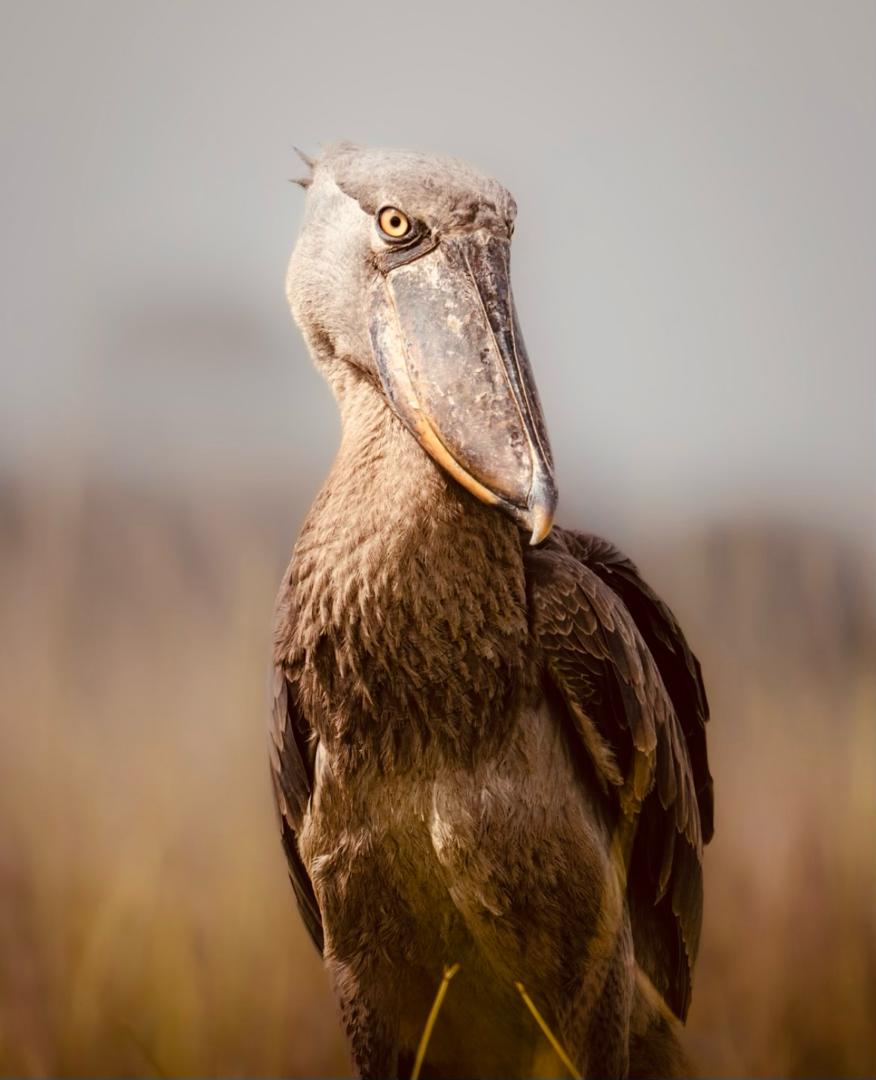
The global wild population is estimated at between 5,000 and 8,000 individuals, making every sighting a genuinely meaningful encounter with a species under sustained conservation pressure. Uganda holds one of the largest and most accessible populations on earth.
Why Uganda Is the World's Premier Shoebill Destination
The shoebill's habitat requirements are precise and demanding: extensive freshwater wetlands with dense papyrus, shallow water rich in lungfish, and minimal human disturbance. Uganda's extraordinary network of lakes, swamps, and river deltas covering millions of hectares across the country provides exactly these conditions at a scale unmatched elsewhere in East Africa.
What sets Uganda apart is not merely the presence of shoebills, but the reliability and accessibility of the sighting. In many countries where shoebills exist, encounters require multi-day expeditions into remote, challenging terrain. In Uganda, an experienced guide can often locate a shoebill within an hour of boarding a canoe at Mabamba Swamp minutes from Entebbe International Airport.
Uganda holds one of the world's largest and most stable shoebill populations
Multiple accessible tracking locations suit different itinerary types and time constraints
Tracking is conducted year-round no seasonal permit restrictions apply
Experienced local guides achieve consistently high sighting rates, particularly at Mabamba
Shoebill tracking pairs naturally with Uganda's broader safari offering gorilla trekking, chimpanzee tracking, Big Five game drives
Uganda's 1,060+ recorded bird species make it Africa's most biodiverse birding destination, with the shoebill as its crown jewel
Uganda has recorded over 1,060 bird species more than any other country of comparable size in Africa. For dedicated birders, a shoebill tracking safari here is merely the beginning of an extraordinary ornithological journey.
The Best Places to Track Shoebills in Uganda
Location 01Mabamba Swamp Wetland ★
Highest Recommended
Mabamba Wetland a Ramsar-designated site on the northern shores of Lake Victoria, approximately 45 kilometres west of Entebbe is the undisputed premier destination for shoebill tracking in Uganda, and arguably the finest reliable shoebill location in Africa.
The wetland's labyrinthine network of papyrus channels, open water pools, and floating vegetation mats creates ideal conditions for both the shoebill and the exceptional guides who know its every favoured feeding station. Most excursions result in sightings within the first hour, and prolonged encounters often with multiple individuals are common.
Tracking at Mabamba is conducted by traditional dugout canoe, paddled silently through narrow papyrus corridors by local guides whose knowledge of the wetland's geography and the shoebill's behaviour has been refined over decades. The silence, the intimacy of the canoe, and the extraordinary quality of the early morning light over the lake combine to make this one of Uganda's most atmospheric wildlife experiences.
45 minutes to one hour from Entebbe International Airport ideal as an arrival or departure day excursion
Consistently the highest shoebill sighting reliability of any location in East Africa
Traditional canoe access minimises disturbance and maximises photographic proximity
Also excellent for African jacanas, malachite kingfishers, lesser moorhens, and papyrus endemics
Morning excursions (departing 6:00–10:00am) deliver the best light and the most active birds
Location 02 Murchison Falls National Park —
Nile Delta Safari Combination
The Victoria Nile Delta where the river fans out across a vast floodplain before entering Lake Albert within Murchison Falls National Park provides a spectacular secondary shoebill tracking environment, and one that delivers the added grandeur of Uganda's finest national park as its backdrop.
Shoebills are regularly encountered during boat safaris in the delta, often appearing on exposed mud banks or papyrus margins alongside Nile crocodiles, hippopotamus, African fish eagles, and Goliath herons. The juxtaposition of the shoebill's prehistoric stillness against the drama of the Nile is, for many photographers, the definitive Ugandan wildlife image.
Combines shoebill sighting with Murchison's world-class Big Five game drives
Private boat excursions on the Nile allow flexible, unhurried searching
The delta's open landscape offers exceptional photography in unobstructed natural light
Best incorporated into a multi-day Murchison Falls itinerary for maximum wildlife diversity
Location 03 Ziwa Rhino & Wildlife Ranch
Stopover Gem
Ziwa Rhino and Wildlife Ranch situated approximately three hours north of Kampala on the road to Murchison Falls is Uganda's only facility for tracking the endangered southern white rhino in the wild. Less well known, but equally rewarding for the visiting naturalist, is Ziwa's resident shoebill population in its extensive wetland areas.
A guided shoebill walk through Ziwa's marshes, combined with a rhino tracking experience and a night in the sanctuary's comfortable lodge, makes for one of Uganda's most distinctive and memorable stopovers a seamless addition to any northern Uganda itinerary.
Perfectly positioned as a one-night stopover between Kampala and Murchison Falls
Guided shoebill walks through wetland areas with resident birds
Combine with white rhino tracking Uganda's only opportunity for this encounter
Relaxed, unhurried atmosphere ideal for photography and nature observation
What to Expect on a Shoebill Tracking Excursion
A shoebill tracking excursion particularly at Mabamba follows a rhythm as unhurried and purposeful as the bird itself. Understanding what to expect allows you to arrive prepared, present, and ready for the encounter when it comes.
Departure: Before First Light
The finest shoebill tracking begins in the hour before sunrise, when the wetland is at its most alive and the light once the sun clears the lake horizon is extraordinary. Departing Entebbe or Kampala by 5:30am allows arrival at Mabamba in time for the most productive morning hours. Your guide will meet you at the wetland's edge with canoes and local trackers already positioned.
The Canoe Journey
The excursion is conducted by traditional dugout canoe, paddled in near-silence through channels so narrow the papyrus brushes the sides of the boat. The sense of entering another world of moving through ancient wetland landscape entirely on its own terms is immediate and profound. Your guide navigates from memory, directing the paddler toward known feeding areas while scanning the vegetation margins with practised eyes.
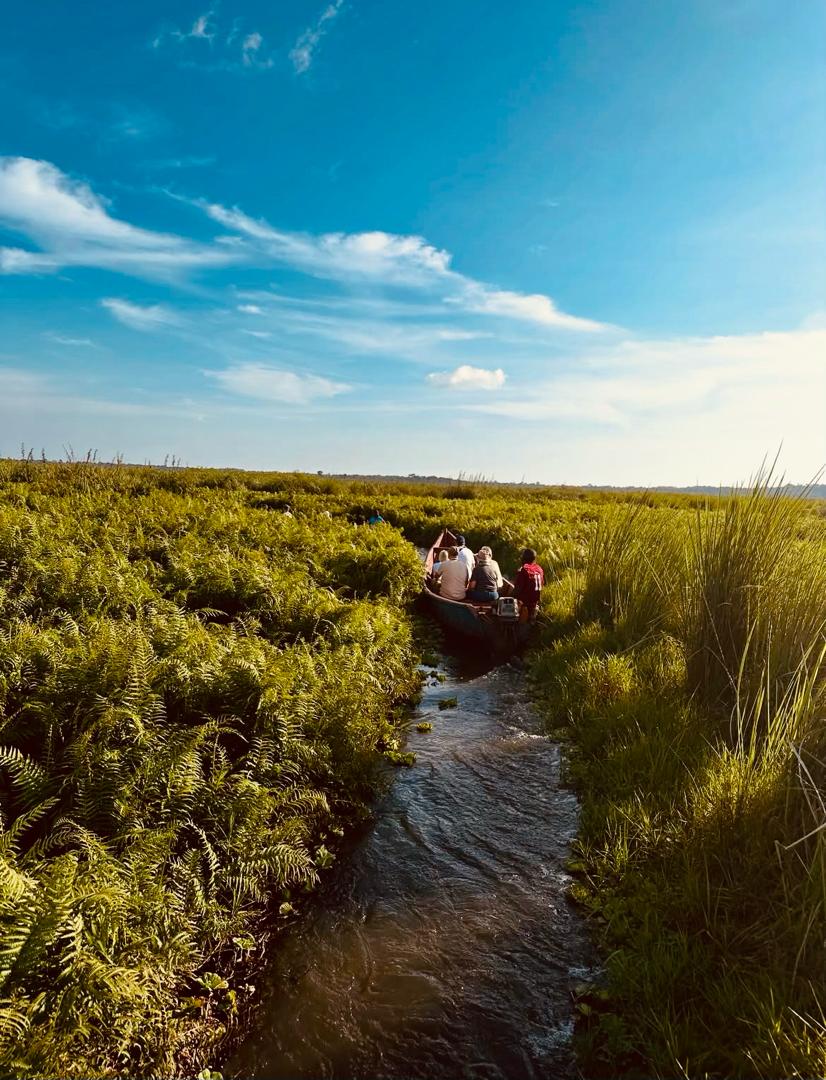
Dugout canoe boat in mabamba wetland
The Encounter
When the shoebill is located, the canoe approaches with deliberate slowness. Habituated to the presence of respectful observers, the birds typically remain stationary allowing extended periods of observation and photography from close range. What you witness in that stillness is remarkable: a bird of absolute self-possession, standing in shallow water with its enormous bill angled downward, scanning the depths below with extraordinary concentration.
If fortune favours you, you may witness the hunting strike itself a sudden, violent, total commitment of the entire body into the water followed by the laborious process of extracting, manipulating, and swallowing prey that can include fish nearly as large as the bird's own head.
What the Shoebill Eats
The shoebill is an apex predator of the wetland ecosystem, and its diet reflects both the range and the violence of that position:
Lungfish the shoebill's primary and most favoured prey, often exceeding one metre in length
Nile tilapia and catfish from shallow water margins
Frogs and water snakes encountered during slow wading
Young Nile crocodiles one of the most dramatic prey items in the avian world
Small reptiles and aquatic mammals in opportunistic encounters
Best Time to Track Shoebills in Uganda
One of the shoebill's great gifts to the visiting naturalist is its year-round residency. Unlike migratory species that demand precise timing, the shoebill remains in its wetland territory across every season making a successful sighting possible on any day of the year.
Peak Season
Dry Season
June – September & December – February
Drier canoe access easier navigation through the wetland channels
Clearer, brighter light ideal for photography
Lower water levels concentrate prey, increasing hunting activity
More comfortable conditions for early morning excursions
Shoulder Season
Green Season
March – May & October – November
Lush, verdant papyrus at its most atmospherically beautiful
Breeding season activity nesting behaviour visible for lucky observers
Fewer visitors a more private and intimate experience
Rains typically brief and afternoon morning excursions unaffected
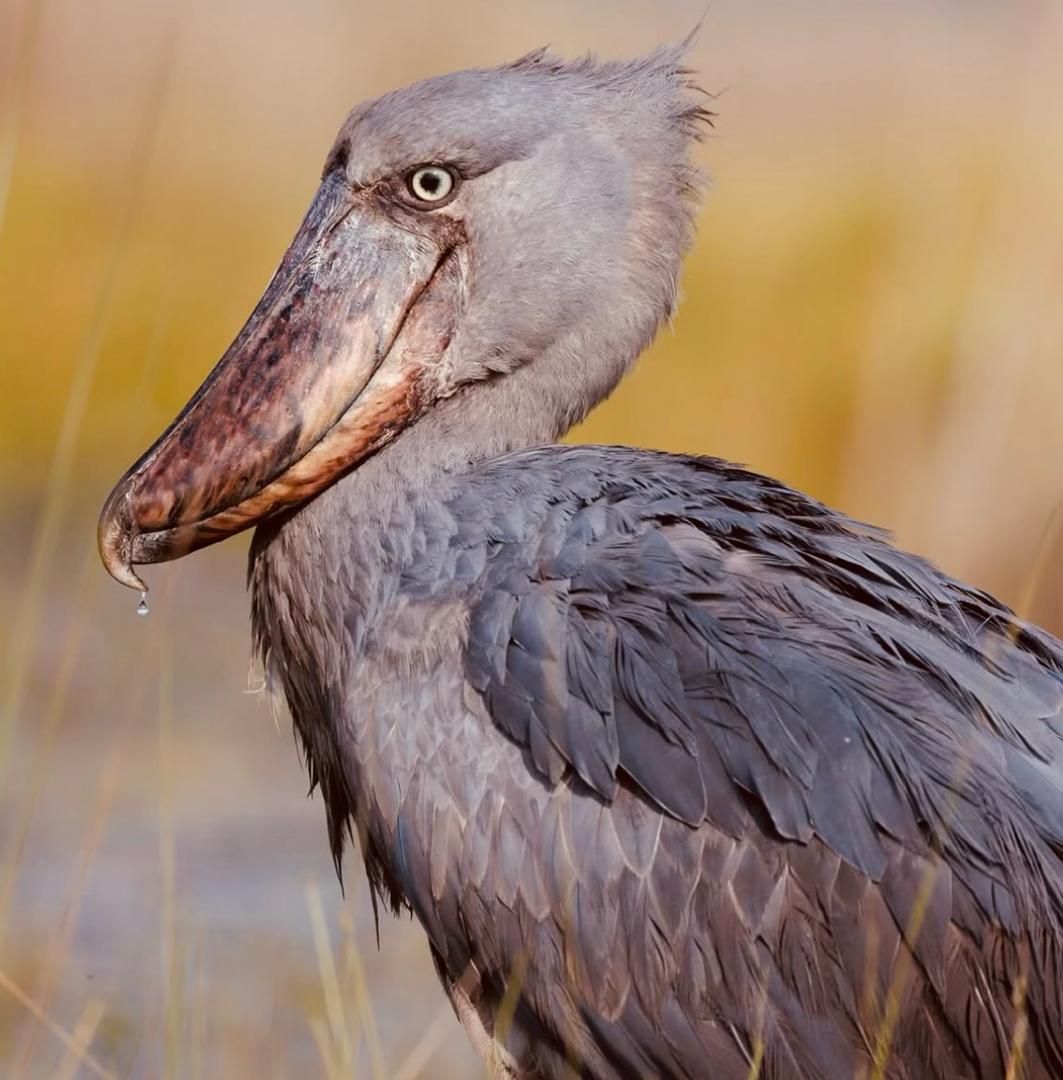
The green season coincides with the shoebill's breeding period making March to May a particularly rewarding time for observers fortunate enough to encounter nesting pairs and, occasionally, chicks. This is the season experienced birders often prefer.
Photography Tips: Capturing the Shoebill
The shoebill is among Africa's most rewarding photographic subjects its scale, its extraordinary structural detail, and its habit of prolonged stillness create opportunities that are genuinely rare in wildlife photography. With the right preparation, images of exceptional quality are entirely achievable from the canoe.
◆Use a telephoto lens of 300–500mm for frame-filling portraits from the canoe
◆Set a fast shutter speed (1/1000s minimum) to capture the hunting strike if it occurs
◆Arrive before sunrise the golden hour light over the lake is exceptional
◆Wear neutral or earth-toned clothing the shoebill is sensitive to bright colours
◆Keep movements slow and deliberate sudden motion disturbs the bird
◆Shoot in RAW format for maximum post-processing flexibility in low light
◆Bracket exposures the bird's grey plumage against bright water is challenging
◆Bring a bean bag or small tripod cushion to stabilise the lens in the canoe
Professional photographers frequently cite the shoebill as one of the most satisfying subjects they have ever encountered in Africa a combination of extraordinary subject matter, reliable proximity, and the utterly unique setting of the papyrus wetland at dawn.
Shoebill Tracking Costs in Uganda
Shoebill tracking is one of Uganda's most accessible luxury wildlife experiences particularly when positioned as a half-day addition to a broader itinerary. Costs vary by location, group size, and the level of guide and boat service engaged.
Location & Experience | Approximate Cost Per Person |
|---|---|
Mabamba Swamp Half-Day Canoe Excursion | $50 – $100 |
Murchison Falls Nile Delta Boat Safari (with shoebill focus) | Included in boat safari / $80–$150 |
Ziwa Rhino Ranch Guided Shoebill Walk | $60 for entry and $30 trekking |
Private Guided Full-Day Birding Safari (shoebill focus) | $200 – $400 |
These costs typically include local guide services, canoe or boat access, and wetland conservation fees. For visitors combining shoebill tracking with a broader Uganda safari gorilla permits, lodge accommodation, and private vehicle our team packages all elements into a single, transparent itinerary cost.
How to Combine Shoebill Tracking with Your Uganda Safari
One of the great advantages of shoebill tracking in Uganda is its extraordinary flexibility it can be woven seamlessly into almost any itinerary, from a single morning excursion to a dedicated multi-day birding safari.
🦍
Shoebill + Gorilla Trekking
Uganda's most famous bird and most famous primate the ultimate combination. Add a Mabamba morning to any Bwindi-based itinerary.
🦁
Shoebill + Wildlife Safari
Pair Mabamba or Murchison Falls shoebill tracking with Big Five game drives across Queen Elizabeth or Murchison Falls National Park.
🦜
Dedicated Birding Safari
For serious birders: a multi-destination Uganda birding itinerary with shoebill as the anchor, alongside 1,060+ species including Albertine Rift endemics.
The Ultimate Uganda Birding Circuit
Day 1–2: Mabamba Swamp shoebill tracking at dawn, Lake Victoria boat birding
Day 3–4: Kibale Forest chimpanzee tracking, Green-breasted pitta, African pitta
Day 5–6: Queen Elizabeth National Park shoebill in Kazinga Channel, Martial eagle, African skimmer
Day 7–8: Murchison Falls shoebill in the Nile Delta, Abyssinian ground horn bill, Denham's bastard
Day 9–10: Bwindi Grauer's broad bill, African green broad bill, Shelley's crimsonwing
Frequently Asked Questions
Where is the best place to see a shoebill in Uganda?
Mabamba Swamp Wetland, approximately 45 kilometres west of Entebbe on the shores of Lake Victoria, offers the most reliable and accessible shoebill tracking in Uganda and arguably in Africa. Experienced local guides achieve consistently high sighting rates, and the traditional canoe experience through the papyrus channels is extraordinary in its own right. The Murchison Falls Nile Delta and Ziwa Rhino Ranch provide excellent alternative locations for visitors whose itineraries pass through those areas.
How long does a shoebill tracking excursion take?
A standard Mabamba shoebill excursion typically lasts three to four hours, including travel time on the canoe and the sighting itself. Most visitors depart around 6:00–6:30am and return to Entebbe or Kampala by mid-morning — making it an ideal activity for arrival or departure days, or as a standalone half-day addition to any Uganda itinerary.
Is a shoebill sighting guaranteed?
No wildlife sighting can ever be guaranteed this is part of what makes the natural world so extraordinary. However, Mabamba's experienced guides achieve sighting rates that are among the highest for any specific target species in Uganda. Most groups locate at least one shoebill within the first hour of paddling. Arriving early, moving quietly, and following guide instructions significantly maximises your probability of a successful and prolonged encounter.
Can I combine shoebill tracking with gorilla trekking in one trip?
Absolutely and this is one of our most popular itinerary combinations. A Mabamba shoebill excursion on the morning of arrival in Uganda, before onward travel to Bwindi for gorilla trekking, adds an exceptional wildlife encounter with minimal logistical complexity. Our specialists design these combined itineraries with particular enthusiasm, and many clients describe the shoebill-gorilla combination as the most remarkable two days of wildlife experience they have ever had.
Do I need to be an experienced birdwatcher to enjoy shoebill tracking?
Not at all. The shoebill's size, its prehistoric appearance, and its dramatic hunting behaviour make it a compelling subject for any wildlife enthusiast experienced birder or complete newcomer. Many of our clients who have never previously pursued a bird-specific wildlife experience describe the shoebill encounter as among the most memorable wildlife moments of their lives. No specialist knowledge is required; only curiosity, patience, and a willingness to be on the water at dawn.
Is shoebill tracking suitable for children?
Yes with appropriate supervision and the right preparation. Children who are comfortable in small boats and who can maintain relative quiet during the excursion typically find the shoebill utterly captivating. We recommend a minimum age of around eight years for canoe-based excursions, and our team can advise on the most suitable tracking locations and formats for families with younger children.
Savannah Explore Africa
Add the Shoebill to Your Uganda Safari
Whether as a dawn excursion from Entebbe or the centrepiece of a dedicated birding journey, the shoebill experience belongs on every Uganda itinerary. Let our specialists place it in yours.

Begin Your Journey
Your story starts
in East Africa.
Tell us your dates, your dream, and how you like to travel. We will design something extraordinary, only for you.